
A marketing plan is a strategic document containing a detailed analysis of a company’s or project’s marketing goals and the steps required to achieve them. It serves as a guiding tool that defines how to reach the target audience using well-considered marketing strategies, taking into account market needs and competition. The plan is built on a careful analysis of the current state of the company or product and includes elements such as the marketing mix strategies (product, price, place, promotion) and an implementation timeline.
Why Companies and Projects Need a Marketing Plan
Setting Clear Objectives
A marketing plan ensures the company sets clear, defined objectives, whether short-term such as increasing monthly sales, or long-term such as strengthening brand awareness. This clarity helps direct every marketing effort toward achieving those goals.
Better Resource Allocation
With a marketing plan in place, companies can manage their budgets more efficiently by prioritizing and choosing the most effective marketing channels to reach the target audience. This reduces wasted resources and increases return on investment.
Strengthening Competitiveness
The plan helps companies better understand the market environment, including studying competitors and analyzing their strategies. This analysis enables businesses to identify their points of advantage and develop unique offerings that build a competitive edge.
Managing Risks and Challenges
Through advance planning, companies can anticipate potential risks and challenges and design strategies to handle them. This gives the business greater flexibility when facing market changes.
Effective Team Communication
The marketing plan acts as a shared reference for every team member, ensuring alignment across departments to achieve unified objectives.
The Role of a Marketing Plan in Achieving Company Goals and Organizing Marketing Activities
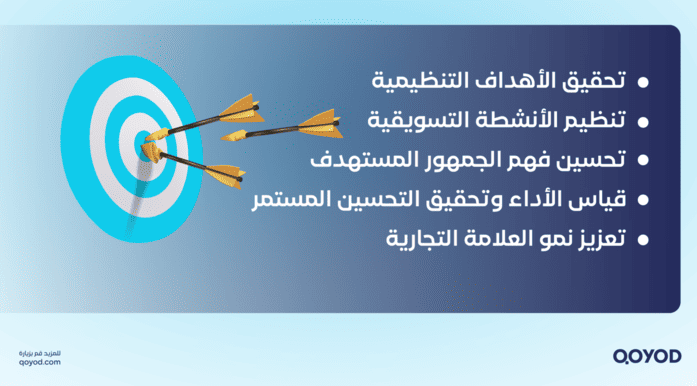
A marketing plan acts as a roadmap that helps companies achieve their organizational and marketing goals in a consistent and effective way.
Achieving Organizational Goals
The plan translates broad company goals, such as increasing revenue or expanding into new markets, into practical and measurable steps. This connection between strategic goals and daily activities enables the company to move steadily toward its long-term vision.
Organizing Marketing Activities
The plan coordinates marketing efforts, from advertising and promotions to customer relationship management. These activities create an integrated experience that strengthens customer loyalty and drives sales.
Better Understanding of the Target Audience
A marketing plan relies on a careful study of the market and target audience, which helps in designing effective marketing messages and communication channels that match customer needs.
Performance Measurement and Continuous Improvement
The plan provides a framework for defining Key Performance Indicators (KPIs) that measure the success of marketing activities. This helps companies make the adjustments needed to improve efficiency.
Boosting Brand Growth
Structured planning helps build a strong brand identity, which establishes the company’s market position and grows customer loyalty.
How to Build a Professional Marketing Plan
Preparing a professional marketing plan is a decisive factor for the success of any project or company. The plan provides a clear vision for achieving business goals, growing sales, and strengthening the brand. It requires studying the target market, choosing the right strategies, and allocating resources effectively. Below are detailed steps for preparing a professional marketing plan:
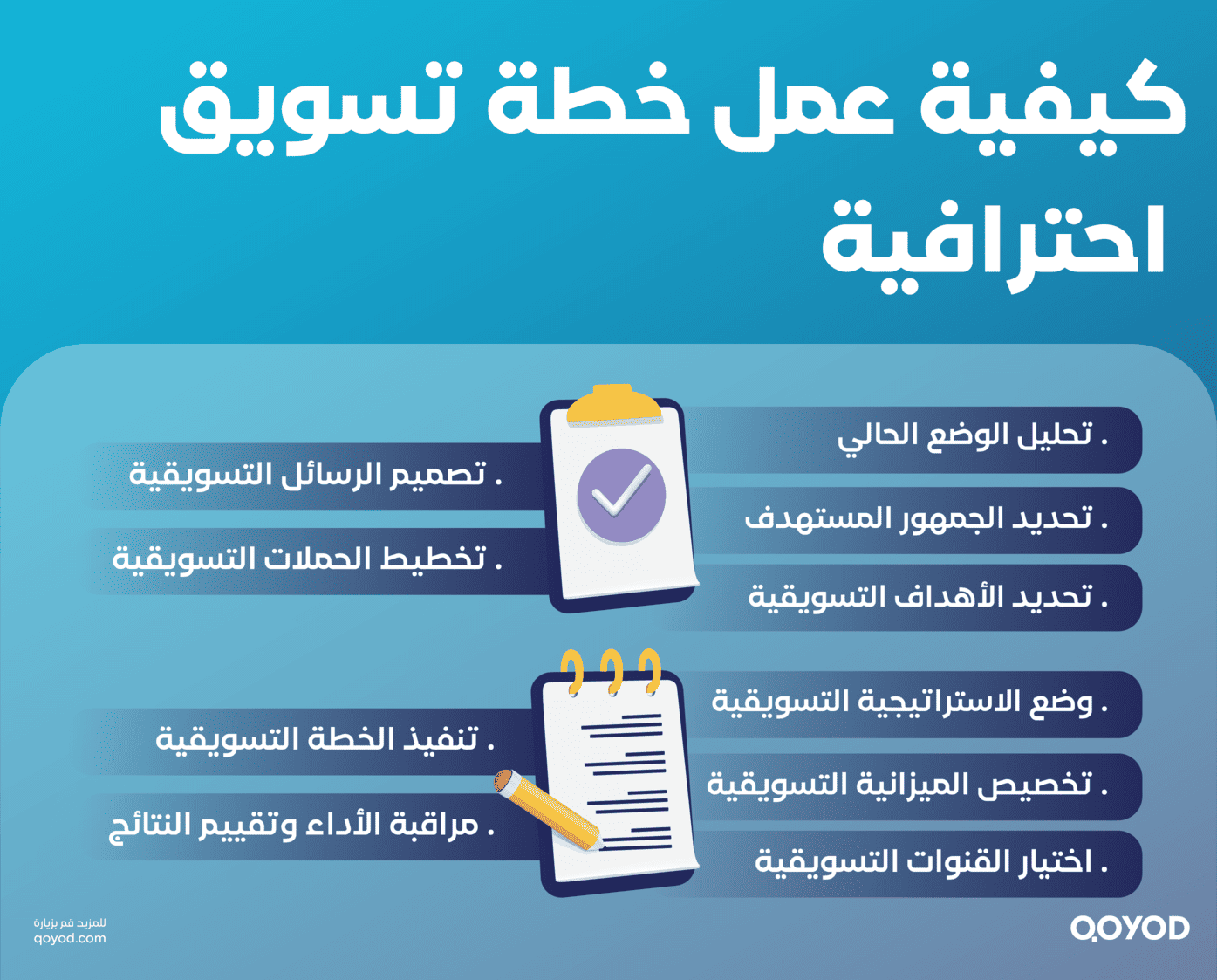
1. Analyze the Current Situation
Analyzing the current situation is the starting point for any successful marketing plan. You must study the company’s situation and its market to better understand the internal and external environment.
- Market analysis:
- Study the size of the target market and the different segments that make it up.
- Understand recent trends that influence customer behavior.
- Assess economic, cultural, or technological factors affecting the market.
- Competitor analysis:
- Identify the main competitors and understand their marketing strategies.
- Evaluate their strengths, such as product quality or brand power.
- Analyze their weaknesses, such as poor customer service or limited reach.
- SWOT analysis (Strengths, Weaknesses, Opportunities, Threats):
- Strengths: such as innovative products or deep expertise in the field.
- Weaknesses: such as limited funding or weak infrastructure.
- Opportunities: such as new markets or growing demand for the product.
- Threats: such as economic shifts or new regulations.
2. Define the Target Audience
Understanding your target audience is the foundation of an effective marketing plan. You need to define:
- Demographics: such as age, gender, geographic location, and income level.
- Psychographics: such as customer interests, buying behavior, and preferences.
- Market segmentation: dividing the market into smaller groups based on shared characteristics to deliver tailored marketing messages.
3. Set Marketing Objectives
Clear objectives are the cornerstone of any successful marketing plan. They must be measurable and time-bound. Use the SMART framework to define them:
- Specific: for example, “increase sales by 20% in the first quarter”.
- Measurable: you can track progress using indicators like the number of new customers.
- Achievable: make sure goals are realistic given your resources.
- Relevant: goals should align with the company’s overall vision and direction.
- Time-bound: set a deadline for each goal, for example “by the end of 2024”.
4. Build the Marketing Strategy
The marketing strategy defines how you will reach your audience and meet your goals. It should cover the four basic marketing elements (4Ps):
- Product:
- Identify the features that make the product or service stand out.
- Improve product quality based on customer feedback.
- Price:
- Choose a pricing strategy that fits the target market, such as competitive pricing or value-based pricing.
- Place:
- Select distribution channels that suit customers, whether physical stores or digital channels.
- Promotion:
- Choose promotion methods like advertising, social media marketing, email marketing, or partnerships.
5. Allocate the Marketing Budget
The marketing budget is the backbone of any successful marketing plan. Steps for allocating the budget include:
- Set priorities: focus on the channels that offer the highest return on investment (ROI).
- Allocate percentages: distribute the budget across activities like digital advertising, public relations, or marketing events.
- Track and adjust: monitor budget usage and adjust as needed to keep goals on track.
6. Choose Marketing Channels
Channel selection depends on where your target audience spends time and how they consume content. Common channels include:
- Social media: such as Facebook, Instagram, LinkedIn.
- Digital advertising: through Google Ads or other platforms.
- Traditional marketing: such as television advertising or print.
- Content marketing: creating blogs, videos, or case studies.
7. Craft the Marketing Message
Your marketing message is how you communicate the value of your product or service to potential customers. To make it effective:
- Use language that fits your target audience.
- Highlight the added value your product offers.
- Keep the message short and clear.
Add a clear call to action such as “Book now” or “Try for free”.
8. Plan Marketing Campaigns
Campaign plans are the practical execution of your strategy. They should include:
- Timeline: when and where campaigns will launch.
- Required resources: the team and tools needed.
- Performance indicators: criteria to measure each campaign’s success, such as new customers or sales.
9. Execute the Marketing Plan
Execution is when ideas turn into action. To ensure effective execution:
- Assign clear responsibilities to each team member.
- Use project management tools to keep tasks organized.
- Review work regularly to confirm progress matches the plan.
10. Monitor Performance and Evaluate Results
After execution, measure results and compare them against the defined objectives. Steps include:
- Analyze KPIs: such as conversion rate, website visits, or revenue generated.
- Make adjustments: if results fall short, identify the gaps and refine the plan.
- Report: produce periodic performance reports that share wins and challenges with the team.
Tips to Ensure Marketing Plan Success
- Stay flexible in the face of market changes.
- Use data to refine strategies and make informed decisions.
- Leverage analytics tools like Google Analytics to understand the audience and improve performance.
- Develop your team continuously through training and learning.
A professional marketing plan helps you reach business goals and grow your operation. The key is thoughtful planning, careful execution, and continuous review to deliver the best results.
Types of Marketing Plans
Marketing is not a random activity. It requires structure and defined plans to achieve goals. Companies rely on different types of marketing plans based on their needs, objectives, and timelines. Below is a breakdown of the most common types:
1. Short-Term Marketing Plan
A short-term marketing plan aims to achieve specific goals within a short period, usually from a few weeks up to a year. It is used to address immediate challenges or capitalize on urgent opportunities.
Key advantages:
- Flexibility: it executes quickly and is easy to adjust based on results.
- Focused goals: it targets specific goals such as boosting sales during a particular season or launching a new promotional campaign.
- Measurable: it includes clear performance indicators such as new customer count or sales rate.
Examples:
- Launching a seasonal discount campaign.
- Promoting a new product for a limited time.
- Targeting new customers using discount coupons.
2. Long-Term Marketing Plan
This plan focuses on achieving strategic goals over a longer span, often between two and five years. Its primary purpose is to build the brand and ensure sustainable growth.
Key advantages:
- Strategic thinking: it includes strategies for expanding market reach or developing new products.
- Brand-building focus: it strengthens company reputation and grows customer loyalty.
- Limited flexibility: it relies on long-term vision, which makes sudden changes harder to absorb.
Examples:
- Building a strong brand presence in a new market.
- Developing strategies to improve customer experience long-term.
- Investing in new distribution channels.
3. Digital Marketing Plan
A digital marketing plan is a core part of modern strategy and focuses on using digital channels to reach customers. Digital marketing methods include social media, email, search engine optimization (SEO), and paid advertising.
Key advantages:
- Wide audience reach: you can reach millions of customers online.
- Precise measurability: analytics tools allow accurate performance tracking.
- Lower cost: compared to traditional marketing, digital marketing is more cost-efficient.
Examples:
- Launching a social media campaign to grow brand engagement.
- Improving website visibility with SEO strategies.
- Sending targeted marketing emails to customers.
4. Traditional Marketing Plan
A traditional marketing plan focuses on conventional methods of promoting products or services such as television advertising, radio, magazines, and newspapers.
Key advantages:
- Reaching non-digital customers: it targets audiences that may not be active online.
- Emotional impact: channels like television advertising deliver a powerful audio-visual experience.
- Local coverage: it works effectively for promotion in local markets.
Examples:
- Advertising via television and radio channels.
- Promoting products through brochures or flyers.
- Hosting local exhibitions or events to grow customer engagement.
5. Product Relaunch Plan
A product relaunch plan is used when a company needs to reintroduce an older product to the market with a fresh look or to improve its performance after demand has dropped.
Key advantages:
- Renewing interest: it draws back customers who lost interest in the product.
- Highlighting improvements: it focuses attention on new or upgraded features.
- Driving sales: it helps recover sales and increase revenue.
Examples:
- Relaunching an older product with design or feature changes.
- Running marketing campaigns that spotlight the improvements made.
- Organizing events that showcase the product in an innovative way.
Why Companies Need Different Types of Marketing Plans
The variety of marketing plans allows companies to meet different needs in varied contexts. Whether the goal is to address short-term challenges, build a long-term strategy, or grow digital presence, these plans help deliver the required results effectively. Choosing the right plan depends on the nature of the project, the company’s goals, and the target audience.
Common Mistakes in Building a Marketing Plan
Building a successful marketing plan is the foundation of reaching business goals. However, many companies and projects fall into common mistakes that cause the plan to fail or reduce its effectiveness. Here is a detailed look at those mistakes and their impact on final results:
1. Lack of Proper Market Analysis
Market analysis is the first and most essential step in building any marketing plan. Skipping it or performing it superficially can lead to inaccurate targeting and overlooked competitors.
Causes:
- Not studying the needs and preferences of potential customers.
- Not analyzing market competitors and their strategies.
- Not understanding the economic and social environment of the target market.
Consequences:
- Mis-targeting customers.
- Wasting resources on ineffective marketing campaigns.
- Difficulty adapting to market challenges.
Solution:
- Conduct thorough research on the market and target audience.
- Use analysis tools like SWOT to understand strengths, weaknesses, opportunities, and threats.
- Update data regularly to keep the plan aligned with market shifts.
2. Setting Goals That Cannot Be Measured
Objectives are the driving force of any marketing plan, but when defined vaguely or in a way that cannot be measured, tracking progress and judging success becomes difficult.
Causes:
- Relying on loose phrasing like “increase sales” without specifying a percentage or timeframe.
- Not using clear performance criteria.
Consequences:
- Difficulty evaluating success or failure.
- Lack of clarity for the execution team.
- Weak motivation among staff to achieve goals.
Solution:
- Use the SMART framework for setting goals (Specific, Measurable, Achievable, Relevant, Time-bound).
- Assign Key Performance Indicators (KPIs) to track each goal.
3. Not Monitoring and Evaluating Performance Periodically
After executing the marketing plan, performance must be tracked continuously to confirm goals are met or to make adjustments when needed. Skipping this step lets mistakes continue and compound.
Causes:
- Not assigning a team responsible for monitoring performance.
- Relying only on final outcomes without tracking ongoing indicators.
- Lack of analytics and reporting tools.
Consequences:
- Ineffective strategies continue for long periods.
- Losing the chance to adjust plans based on challenges or results.
- Declining return on investment.
Solution:
- Create a routine evaluation cycle (weekly, monthly, or quarterly).
- Use data analysis tools that provide detailed reports such as Google Analytics or marketing management platforms.
- Refine plans based on data and feedback.
4. Ignoring Market Changes or New Trends
Markets are inherently dynamic, and ignoring shifts or failing to respond quickly can make a marketing plan ineffective.
Causes:
- Not following technological and social trends.
- Sticking with a fixed plan without adapting to new challenges.
- No mechanism for exploring new opportunities.
Consequences:
- Losing competitive ability.
- Targeting customers with outdated, unappealing methods.
- Declining brand position in the market.
Solution:
- Track modern trends such as AI in marketing or social media marketing.
- Set up dedicated teams to monitor market changes and assess their impact on existing plans.
- Invest in modern technology and tools to improve marketing operations.
To avoid these common mistakes when building a marketing plan, companies and projects should invest in research and analysis, set measurable goals, monitor performance continuously, and respond quickly to market changes. Conscious management of these factors ensures plan success and sustainable goal achievement.
Frequently Asked Questions (FAQ)
What is the difference between a marketing strategy and a marketing plan?
The strategy is the “mental concept” (why and what will we do?), while the plan is the “execution roadmap” (how and when will we do it?) that includes dates, budget, and specific responsibilities.
How does SWOT analysis help your plan succeed?
It lets you leverage your strengths (such as product quality) to capture opportunities (such as a new market), while protecting you by addressing weaknesses before they turn into real threats from competitors.
Why is defining a “Buyer Persona” crucial?
Because marketing to everyone means marketing to no one. Defining a buyer persona (age, interests, pain points) helps you craft messages that match their needs precisely, which raises conversion rates and lowers customer acquisition cost.
How do I measure the success of my marketing plan?
Through KPIs such as Customer Acquisition Cost (CAC), Return on Investment (ROI), and conversion rate. If the numbers are not improving, the plan needs immediate adjustment.
Conclusion
Preparing a professional marketing plan template is not optional, it is a must for the success of any company or project. By following the steps above and avoiding common mistakes, you can reach your marketing goals efficiently and grow return on investment. Download the free templates to start building your marketing plan today and begin your success journey with confidence and a well-considered strategy.
Join the inspiring Qoyod community. Subscribe to our pages on LinkedIn and Twitter to be the first to see the latest articles and updates. A chance to learn and grow in the world of accounting and finance. Do not miss the chance, join today.