
A feasibility study is the tool that allows project owners to evaluate a business idea comprehensively and determine whether it can realistically be executed and succeed. It aims to assess every aspect of a proposed project, including legal, technical, and economic dimensions, to ensure the project is worth the investment and capable of delivering the expected returns.
Is a feasibility study really necessary?
Yes, absolutely. When you are thinking about launching a new project, a feasibility study is an essential first step that must be prepared with great care, for the following reasons:
Validating the project idea
It helps you evaluate the core idea of the project from every angle. Through careful analysis you can determine whether the idea has the potential to succeed, and it materially reduces the risks attached to the project.
Increasing the odds of success
A feasibility study includes an analysis of the target market, including its size and the preferences of potential customers. This helps you craft effective marketing strategies and ensure that the products or services you offer actually match what the market wants.
Verifying legal and regulatory requirements
Launching a new project requires compliance with several laws and regulations. The feasibility study covers the legal side of the project, such as the licenses required and compliance with applicable standards, ensuring the business operates within the legal framework.
Defining the technology and the economics
A core part of the feasibility study is evaluating the technical side of the project, including equipment and required technology. Alongside that, the economic measures relating to costs and potential revenue are analyzed, which helps you build accurate financial plans.
Assessing investment worthiness
Through the study you can determine whether the project deserves investment. This is done by analyzing the expected profit ratio and the financial returns over the project’s lifetime, including the expected payback period for the capital, which leads to better-informed investment decisions.
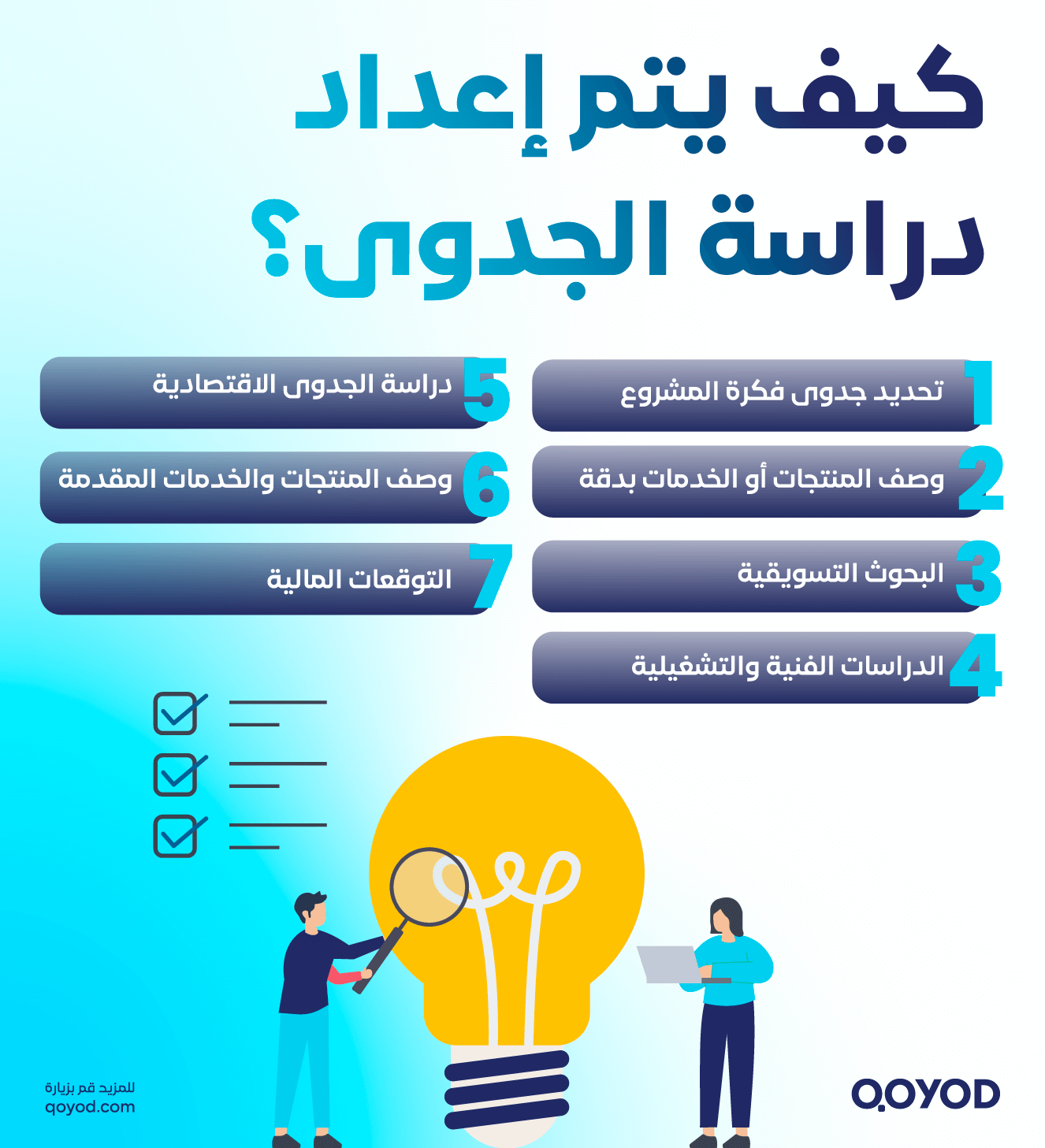
How is a feasibility study prepared?
Preparing a feasibility study is a structured process that requires careful planning and presentation to ensure every detail about the project is properly captured. The most important points include:
- Define the project objective: Start by setting the main goal of the project. Is it to generate a specific profit, or to deliver an innovative service?
- Gather information: Collect data about the target market, competitors, available technologies, and legal requirements from multiple sources, including field research.
Competitor analysis
Analyzing competitors is a vital part of the feasibility study and helps you identify the strengths and weaknesses of the main players in the market. It enables effective competitive strategies that differentiate the project. By studying how competitors market, distribute, and where they struggle, an entrepreneur can build plans to capture untapped opportunities or improve on weak areas.
Describing the product or service
- Detailed product or service description: Provide a thorough description of the product or service, covering its features, advantages, and the competitive benefits it offers.
- Accounting data: This covers estimated costs, expected revenue, projected profit and loss, and required capital.
Administrative procedures and operations
- Administrative procedures: Define a suitable management structure, job responsibilities, and organizational accountability.
- Operational processes: Plan the daily flow of operations, manage human resources, and identify logistical needs.
Risk assessment
Identify and evaluate the potential risks that could derail the project, whether financial, legal, or operational. The study assesses how to avoid these risks or mitigate their impact, helping investors and decision-makers act more confidently and ensuring continuity under unexpected conditions.
Contingency plan
This involves alternative strategies for handling unexpected challenges or crises. A contingency plan is essential to keep operations running without disruption when something goes wrong, such as an economic or operational issue.
Exit strategy
This explains how the project owner can wind down operations if the project fails, including how to recover capital and avoid heavy losses. Every project should have an exit plan to limit financial damage in case things stall.
Marketing research
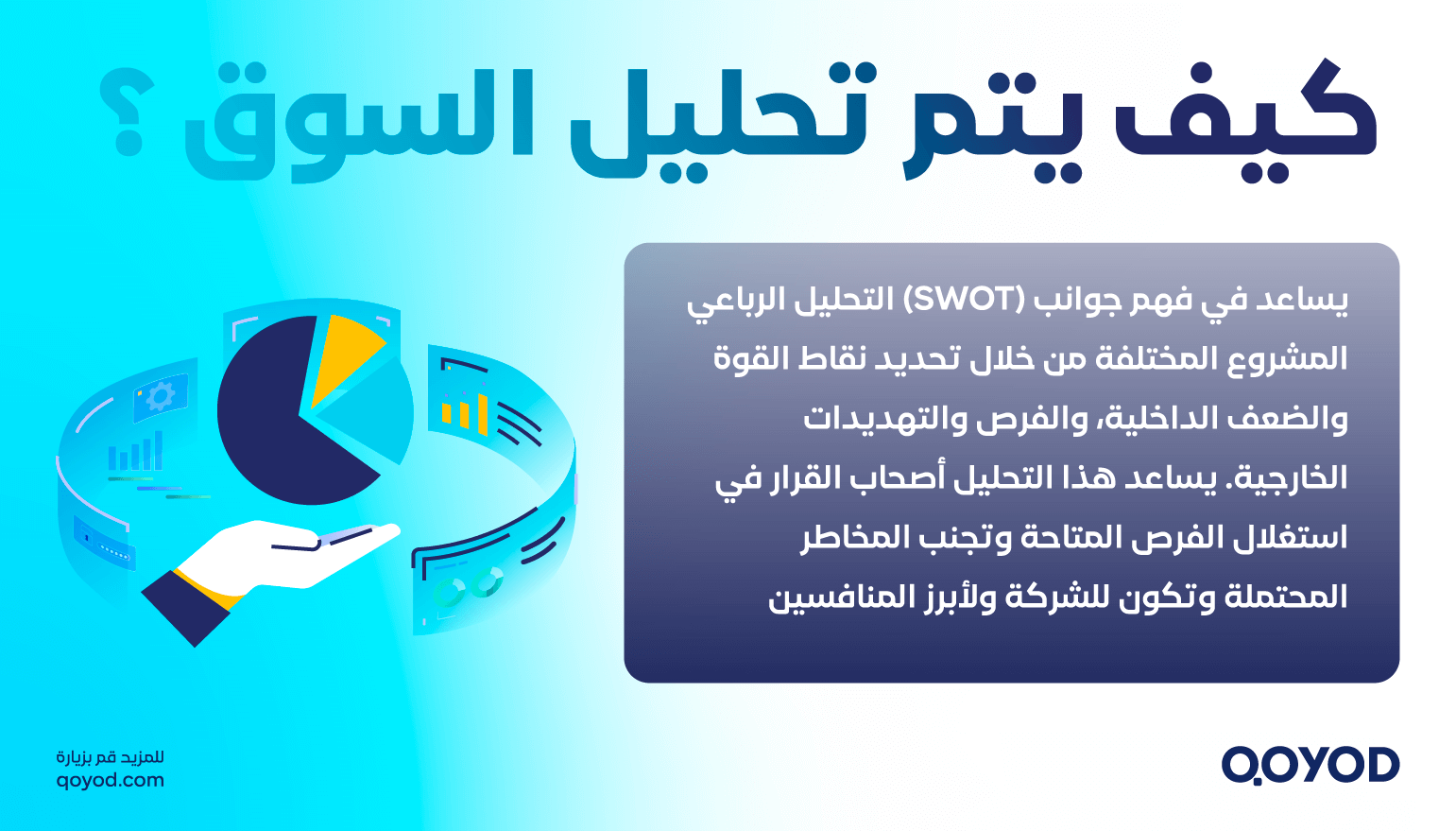
Market analysis: A SWOT analysis helps you understand the project from different angles by identifying internal strengths and weaknesses and external opportunities and threats. It allows decision-makers to capitalize on opportunities and avoid potential risks.
Marketing strategies: Develop effective marketing plans to reach potential customers and increase awareness of the product or service.
Tax and regulatory obligations
- Legal compliance assessment: Identify legal requirements such as licenses, certifications, and regulatory compliance.
- Tax obligations: Analyze tax requirements, estimate potential tax costs, and ensure compliance with tax policies set by the Zakat, Tax and Customs Authority (ZATCA).
Technical and operational studies
- Technical study: Evaluate the required technologies, equipment, and the technical expertise needed to execute the project.
- Operational study: Evaluate daily operations and ensure the human and physical resources are available to run the project efficiently.
Economic feasibility study
- Cost-benefit analysis: Estimate initial and operating costs, define expected revenue, and compute net profit.
- Cash flow analysis: Prepare cash flow projections to ensure sufficient liquidity is available to cover operating costs and financial obligations.
Project timeline feasibility
- Schedule feasibility: Set a realistic timeline for execution and the different project phases, and align it with financial and operational goals.
- Credibility: Timelines must be realistic and executable so that the project is taken seriously and attracts investment.
Attracting investment
- Preparing the final report: Consolidate all data and analyses into one comprehensive report that presents the full feasibility of the project. The report should be compelling to investors.
- Demonstrating credibility: Provide accurate and transparent information that helps investors decide on funding the project.
What does a project feasibility study template include?
A feasibility study template is a key tool to evaluate a project before launch. The template covers 16 main points that detail every aspect of the project, as follows:
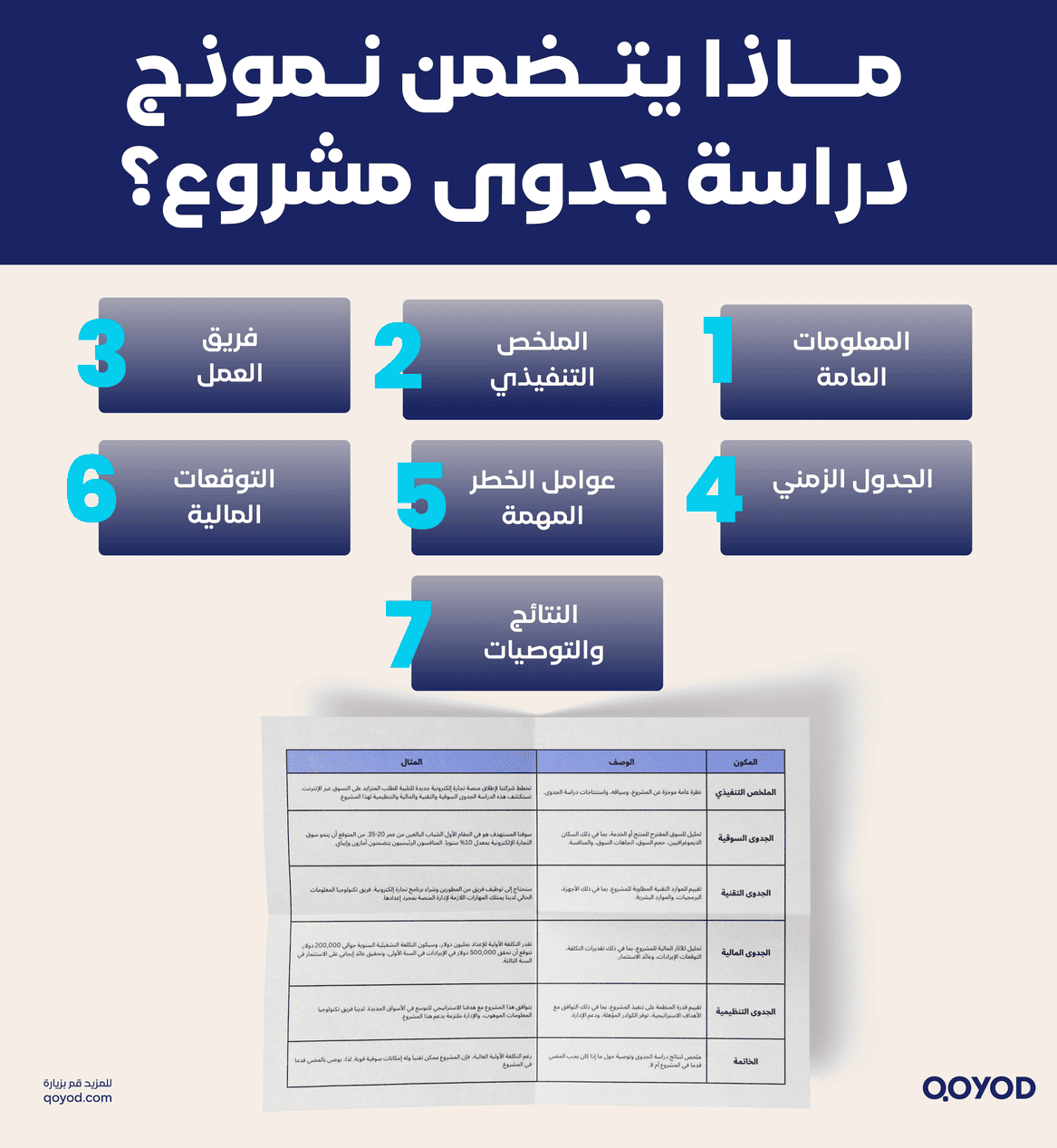
General information
The feasibility study starts with basic information about the project: its name, the owner’s name, the underlying idea, and the reasons behind selecting it. It also identifies the legal form of the business, the partners’ names, their roles, and their ownership shares.
Executive summary
This section presents a complete overview of the project feasibility study’s content. The executive summary is drafted at the end of the study to ensure it captures all the essential details.
Description of products and services
Here you provide a detailed description of the products or services the project will offer, including the features and the benefits that customers will receive from using them.
Technology and its impact
This section explains how technology will affect the project, including the benefits and challenges associated with adopting different technologies.
Country economy
This part provides a snapshot of the economic landscape in the country where the project will operate, which matters for understanding the wider context.
Product or service market
The current market for the product or service is described, including the target segment, the level of competition, and distribution channels. It also explains why a particular customer segment is being targeted.
Marketing strategy
This explains how the product or service will be marketed effectively to the target segment to achieve the highest possible return on investment.
The company and the team
This part covers the required headcount, future expansion plans, and the project’s ability to adapt to changes and restructure when needed.
Timeline
This sets the time horizon for working on the project, with room to adjust and refine the schedule as needed.
Technical section
This section provides an overview of the project’s site, the raw materials, and the procedures needed for production or service delivery.
Business model
This section explains how the project will generate profits through its proposed business model, including distribution and pricing details.
Key risk factors
Risk factors that the project may face are analyzed using frameworks such as SWOT to identify strengths, weaknesses, opportunities, and threats.
Capacity
This part addresses the project’s ability to execute and the potential difficulties that could arise during implementation.
Financial projections
Detailed financial projections and the budget are presented, a critical part of understanding the economic feasibility of the project.
Capital requirements and funding strategy
This section explains how the project will be financed, including the amounts needed and the payment schedule.
Findings and recommendations
The final results of the feasibility study are presented here. They state the economic viability of the project alongside the upsides, downsides, and the likelihood of success.
Environmental and social analysis
Environmental and social analysis is an important part of any feasibility study, especially for projects that can directly or indirectly affect the environment and the community. This analysis examines environmental effects such as pollution, natural resource consumption, and waste, and it studies the project’s impact on the local community, including jobs, local services, and infrastructure. The environmental analysis can include energy and water consumption, the volume of solid and liquid waste produced, and whether the project contributes to reducing pollution through eco-friendly technologies or recyclable materials.
The social analysis focuses on how the project interacts with the surrounding community and its social impact, such as improving the standard of living in nearby areas, providing local jobs, or offering products and services that meet community needs. It may also cover how the project supports sustainable practices and encourages the use of renewable resources. This is required not only to comply with local and international regulations, but also to strengthen the project’s reputation and make it more attractive to investors, particularly as many companies move toward social and environmental sustainability. Environmental and social analysis also boosts long-term sustainability and improves the project’s relationship with the local community.
Growth and expansion strategies
Growth and expansion strategies are essential to a feasibility study because they give the project a long-term view and define how it will develop after its initial launch. This section sets a practical plan to grow revenue and market share and to achieve local or international reach. It should define the phases of expansion, such as increasing production capacity, launching new products, opening new branches, or entering new markets. These strategies determine when and how the project can expand while remaining sustainable and profitable.
Growth planning also covers scaling existing operations and analyzing target market needs to uncover new opportunities. This can include studying the potential demand for new products or exploring partnerships with other industry players to widen the business base. It also includes developing new technologies and procedures to improve productivity, or investing in digital marketing tools to reach a wider audience. Growth and expansion require additional resources and full financial planning to ensure opportunities are captured in a way that delivers a strong return on investment and reduces financial risk. That makes this section critical for the long-term sustainability of the project and gives investors confidence in its long-term viability.
Risk and contingency management
Risk and contingency management is one of the most important sections of a feasibility study. It focuses on analyzing and assessing the potential risks the project may face, whether financial, operational, or legal, and on building contingency plans for any issue that may arise. Risks are identified based on factors such as economic changes, fluctuations in demand for the product or service, legal challenges, intense competition, or rising operating costs. The goal of risk management is to define ways to avoid or reduce these risks, such as maintaining adequate liquidity, contracting with multiple suppliers, and adopting modern technology that lowers cost and improves efficiency.
Contingency management means setting strategies to handle unexpected scenarios. For example, if there is a problem affecting cash flow, there should be a plan to cut unnecessary costs or secure temporary financing to keep the business running. For operational challenges such as sudden breakdowns or raw material shortages, a plan can include fast procedures to buy from alternative suppliers, or other emergency steps to avoid work stoppage. Having a contingency plan and an effective risk management process strengthens the stability of the project and reassures investors and partners that the business is built to withstand unexpected challenges.
Exit strategy
An exit strategy is a plan prepared in the feasibility study to clarify how the project would be closed or sold if it fails to achieve the expected success or profitability, in order to limit losses and protect the partners’ investments. An exit strategy is essential for any project because it gives owners and investors a way to plan for departure with the least possible financial damage if major unsolvable issues arise. It also provides a path to recover as much capital as possible and avoid the excess costs of keeping an unprofitable business running.
Types of feasibility studies
A project feasibility study covers several dimensions to ensure success and sustainability. The main types include:
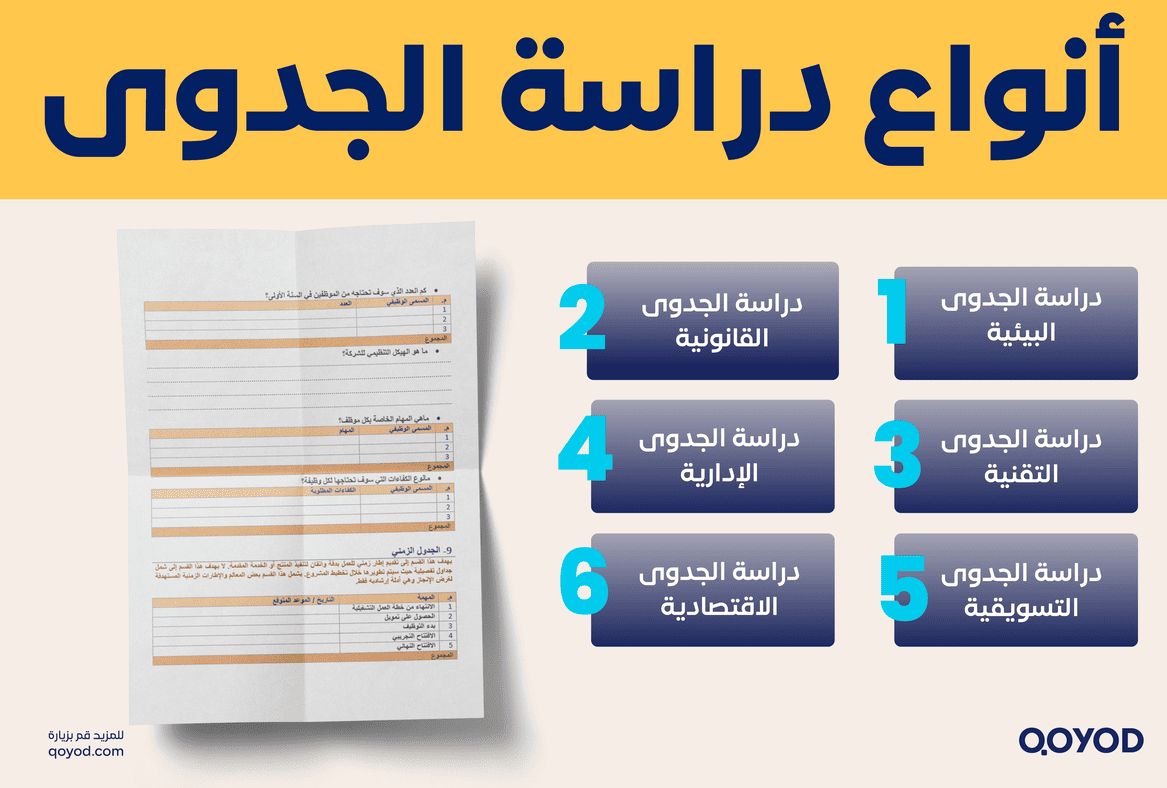
Environmental feasibility study
This study aims to evaluate the project’s impact on the environment. It assesses potential environmental effects such as pollution and resource consumption and identifies the measures needed to reduce negative impact. It also promotes environmental sustainability so the project meets environmental standards and protects natural resources for future generations.
Legal feasibility study
This study focuses on the legal aspects of the project. It identifies legal requirements and applicable regulations, evaluates the licenses and permits needed, and analyzes potential legal risks and how to handle them, ensuring the project complies with all laws and regulations.
Technical feasibility study
This study evaluates the technical and technological aspects of the project. It helps assess the availability of suitable technology, evaluates the quality of equipment used, and confirms that the chosen technology effectively supports the project’s objectives.
Managerial feasibility study
The managerial feasibility study evaluates the management capacity needed to run the project. It includes analyzing the right organizational structure, assessing the human resources and skills required, and developing management plans to ensure the project is executed successfully and operates effectively.
Operations management
This is about defining how daily operations will be managed to ensure efficiency and continuity. It includes organizing human and physical resources, defining operational procedures, and improving internal processes to maximize performance and reduce waste.
Marketing feasibility study
This study focuses on analyzing the target market and evaluating demand for the product or service. It covers understanding potential customers, analyzing market behavior and competition, and selecting suitable marketing strategies to maximize ROI.
Economic feasibility study for small businesses
This study evaluates the economic side of a small business. It includes cost-benefit analysis, estimating expected financial returns, and assessing how well the project aligns with the defined economic targets to ensure sustainable profits.
How Qoyod helps after the study
Qoyod is a modern accounting platform that simplifies business management across many areas, making it an excellent choice for small and medium-sized business owners. It improves operational and administrative workflows thanks to its advanced features and ease of use. Here are the main ways Qoyod helps:
- Creating quotes: Build professional quotes quickly and easily. Companies can prepare detailed quotes for customers and send them electronically.
- Converting quotes to invoices: With a single click, you can convert quotes into invoices, saving time and reducing human error.
- Reporting: Qoyod automatically generates detailed reports as soon as invoices are created.
- Inventory tracking: Track every inventory item precisely, including available quantities, sales, and purchases.
- Inventory alerts: Get alerts when inventory levels reach a defined threshold, so you can reorder products on time.
- Recording financial transactions: Easily record sales, purchases, and payments, keeping your accounting data accurate.
Frequently Asked Questions (FAQ)
What is the difference between a feasibility study and a business plan?
A feasibility study answers the question: “Is this idea even viable?” and is done before launch. A business plan answers: “How will we execute it?” and is built after the project’s viability has been confirmed, covering the operational and marketing details going forward.
When is a project considered economically unviable?
When the capital payback period exceeds what investors consider reasonable, or when the break-even point is so far out that expected revenue cannot cover operating costs and financial obligations in the medium term.
Why is SWOT analysis a core part of the study?
Because it puts the idea against reality. It identifies the project’s internal strengths and weaknesses and the external opportunities and threats (such as competitors or regulations), helping you build defensive and offensive strategies before spending a single riyal.
How does Qoyod support feasibility study outcomes after launch?
Qoyod acts as a tool to validate the financial assumptions. The study sets the “projections,” and Qoyod records the “reality.” By comparing actual costs and revenue against what was assumed in the feasibility study through real-time system reports, you can spot deviations and correct course immediately.
Conclusion
A project feasibility study is not just a procedural step. It is the backbone that supports your vision and turns ambitious ideas into reality. We have seen how a feasibility study can light the path, reveal potential risks, and highlight the opportunities worth pursuing. Investing in a well-built feasibility study is your first investment toward the success of the project. It gives you a clear roadmap and helps you avoid unwelcome surprises, so let this tool be your constant companion on your entrepreneurial journey, ensuring every step is grounded in confidence and knowledge and helping you achieve your goals with the highest level of efficiency and success.
Real success lies in turning the feasibility study into an actionable business plan, and this is where Qoyod comes in. Qoyod offers a wide range of services to its customers, including electronic invoicing, a point of sale (POS) system, inventory, and customer management, making it a comprehensive accounting platform.
Now that you know how to download a feasibility study template, try Qoyod free for 14 days. It is an affordable accounting platform built for your needs.
Join our community. Follow our pages on LinkedIn and Twitter to be the first to see new articles and updates. It is a chance to keep learning and growing in the world of accounting and finance. Don’t miss out, join today.