Running a pharmacy in Saudi Arabia means managing thousands of SKUs, multiple suppliers, and a steady flow of cash, card, and credit sales. On top of that, every invoice has to go through ZATCA, and per-line VAT treatment needs to be exact. This guide explains what makes pharmacy accounting distinct, and how the right inventory and accounting system keeps suppliers, customers, stock movements, and VAT visible inside one ledger.
What makes pharmacy accounting different
A pharmacy is one of the most regulation-heavy retail businesses in Saudi Arabia. It operates under SFDA rules, prices are tightly regulated, and ZATCA requires every sale to be issued on a certified e-invoice. On the accounting side, the pharmacy needs a system that records every sale and purchase the moment it happens, splits VAT correctly per line, and updates supplier and customer balances in real time.
Pharmacy accounting revolves around four connected pieces: an organized inventory across one or more branches, supplier and customer ledgers with up-to-date balances, per-line VAT treatment (most prescription medicines are exempt or zero-rated under Saudi rules, OTC products and cosmetics are taxable at 15%), and ZATCA-approved e-invoicing on every sale. The right software ties all of these inside one ledger.
Daily reality is a long list of small movements: receiving deliveries from distributors on credit terms, recording each purchase invoice, selling items at the counter or to corporate customers, recording returns and adjustments, and closing the till at the end of every shift. Every missed step shows up later as a gap between the physical stock count and the ledger, or as a missing receivable from a corporate customer.
The most common accounting challenges in pharmacies
Every Saudi pharmacy operator runs into the same four recurring accounting problems. They share one root cause: a fragmented set of tools that do not all post into the same ledger.
1. Large SKU count. A pharmacy can carry thousands of items from many suppliers, each with its own price and VAT treatment. Recording every item correctly in the system, with the right tax category and current price, is the foundation of every financial report that follows.
2. Multiple suppliers, multiple terms. Pharmacies deal with several drug distributors at the same time, each with their own payment terms and discount levels. Tracking payables per supplier with proper due dates determines the pharmacy’s ability to honor its commitments without disruption.
3. Per-line VAT treatment. A single invoice can include an exempt prescription medicine and a 15% cosmetic product. Classifying each SKU with the correct VAT category in advance lets the e-invoice carry the right totals automatically, and feeds an accurate quarterly VAT return without manual adjustment.
4. Multiple branches and warehouses. Pharmacies operating more than one branch need a system that supports multiple stock locations and movements between them. Every inter-branch transfer and every sale across every branch has to roll up into one set of company books, not isolated per-branch spreadsheets.
What a pharmacy actually needs from its accounting software
What separates an accounting system that actually serves a pharmacy from a generic one shows up in five areas:
| Task | Generic accounting tool | What a pharmacy needs |
|---|---|---|
| Item master | Generic list | Each SKU with price, VAT code, and movement history |
| Locations | Single warehouse | Multiple branches and warehouses with transfers |
| Suppliers and customers | Basic list | A file per party with live balances and aging |
| VAT | Single rate | Per-line: exempt, zero-rated, or 15% |
| E-invoicing | Manual or non-certified | ZATCA phase-two certified |
Beyond the table, a pharmacy specifically needs three capabilities that generic software does not deliver:
- Connected point of sale, so every counter sale flows automatically into the accounting ledger, deducts the SKU from inventory, and posts revenue to the right account without manual re-entry.
- Marketplace integrations with POS systems, e-commerce platforms, and business apps through the app marketplace, so sales and purchase data stay unified inside the accounting system.
- Per-line VAT treatment on invoices, so prescription medicines (exempt) and OTC products (15%) carry the right rate on the same invoice. A ZATCA-certified simplified tax invoice is then issued automatically per sale.
How to organize a pharmacy’s books step by step
Moving from a paper-based pharmacy to integrated accounting takes around one to two weeks. This is the sequence the Qoyod onboarding team applies with every new pharmacy customer:
E-invoicing and ZATCA compliance for pharmacies
Phase two of ZATCA e-invoicing requires every pharmacy invoice to be issued through a certified system connected to the Fatoora platform. Pharmacies issue mostly simplified tax invoices because the customer at the counter does not carry a tax number, and B2B tax invoices to insurers and clinics under the Clearance flow. For a side-by-side comparison of vendor costs, the guide on e-invoicing pricing in Saudi Arabia is the best starting point.
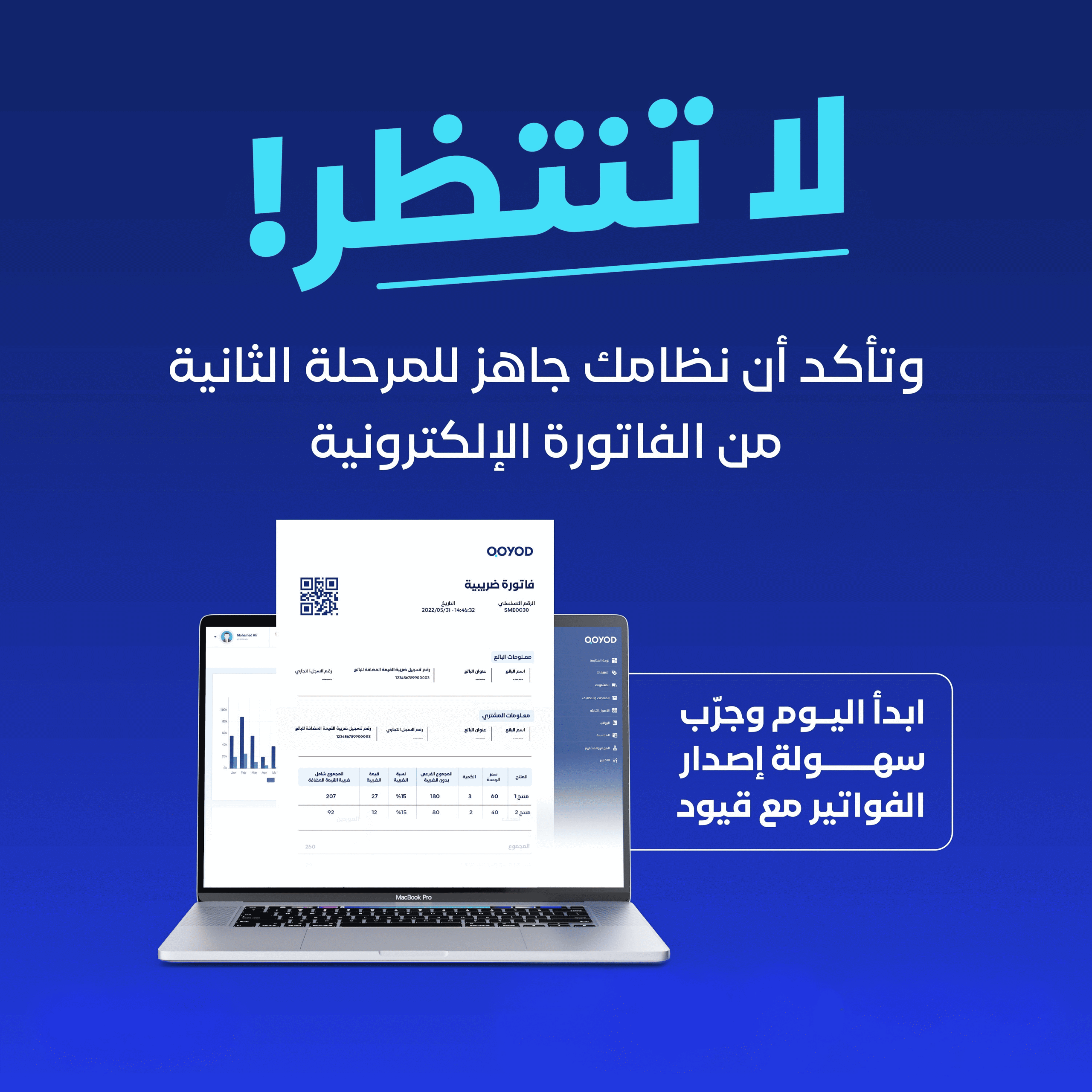
Every prescription invoice must include the pharmacy name and tax number, a sequential invoice number, the date and time, an itemized list of items with the correct VAT treatment per line (exempt for prescription medicines, 15% for OTC), the totals before and after VAT, and a QR code. A certified system generates and transmits a signed XML copy to the Fatoora platform automatically within the 24-hour window for simplified invoices.
How to evaluate a ZATCA-certified system for a pharmacy
When evaluating any e-invoicing vendor for a pharmacy, verify these six criteria:
- Official ZATCA phase-two certification with a verifiable approval number on the Authority’s portal.
- Per-line VAT treatment on a single invoice (exempt, 15%, zero), not a single rate on the whole invoice.
- Both Reporting (B2C counter customers) and Clearance (B2B insurers and clinics) flows in one system.
- Long-term cloud storage of signed invoices for at least six years.
- A simulation environment for issuing test prescription invoices before going live.
- Live input-VAT and output-VAT reports ready in time for the quarterly filing deadline.
Where Qoyod fits in specifically for pharmacies
Qoyod brings together, inside one account: cloud accounting, inventory across multiple branches and warehouses, ZATCA-approved e-invoicing with per-line VAT, supplier and customer ledgers with live balances, and consolidated financial reports. Every sale and purchase posts an automatic journal entry inside the same ledger.
The platform handles multi-branch pharmacies under one account, with inter-branch stock transfers (useful for emergency lending of slow-moving items between branches), role-based permissions per branch, and either consolidated or per-branch reports. It runs fully in the cloud so head office, branch managers, and the external accountant share the same numbers from any device.
For pharmacies opening new branches or migrating from a legacy system, the setup service and the bookkeeping service are available as part of Qoyod Pro Services, alongside the app marketplace for connecting to POS and business app partners.
Frequently asked questions
Does Qoyod support multi-branch inventory for pharmacies?+
How does Qoyod handle user permissions across branches?+
How does Qoyod handle corporate customers and credit sales?+
Can the system handle per-line VAT on a single prescription invoice?+
Does Qoyod work for multi-branch pharmacies?+
Is technical support available 24/7?+
Running a pharmacy does not need a generic accounting tool, it needs a disciplined ledger that ties suppliers, customers, multi-branch stock, per-line VAT, and ZATCA e-invoicing together. The pharmacies that consistently grow are the ones that record every transaction on the day it happens and review their numbers every week. That is exactly what Qoyod is built for in Saudi Arabia.